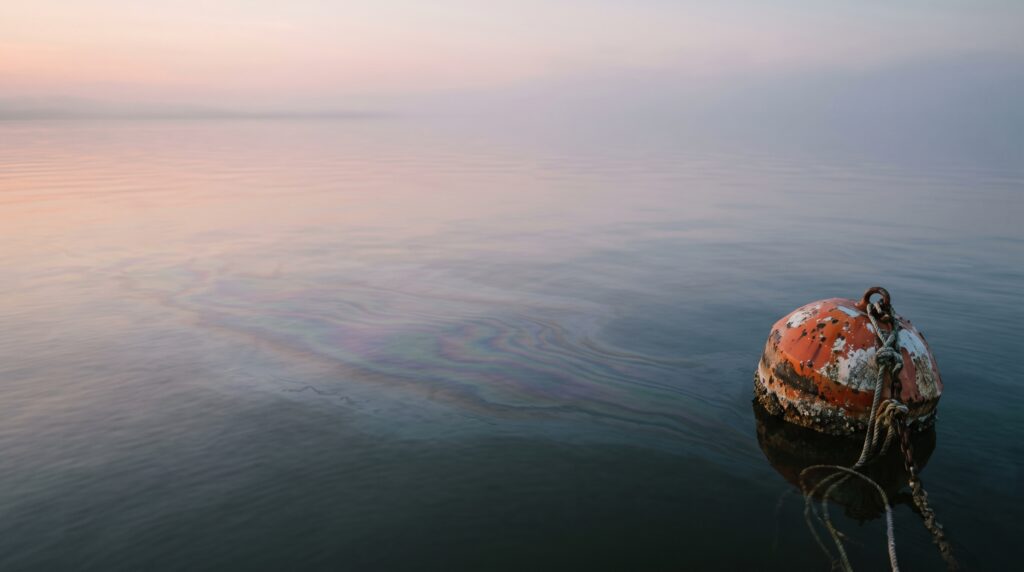
The shipping conflict between the United States and Iran is concentrating an unusual volume of oil in one of the world’s most sensitive marine environments.
As of Monday, 42 tankers were waiting to transit the Strait of Hormuz, 18 of them carrying oil, according to MarineTraffic data.
Their combined cargo capacity comes to about 1.76 million cubic meters of oil and petroleum products — roughly 11.1 million barrels, or close to 11 percent of world daily oil demand.
At least 75 ships have been attacked since the war began and 21 seafarers killed.
Two incidents caused minor oil spills and six vessels caught fire.
The Caroline Bezengi, which ran aground off Oman in early June carrying about 800,000 barrels, is still leaking and threatens some 40 km of coastline.
Researchers at Qatar University’s Environmental Science Center have written that the Gulf “has become one of the most anthropogenically impacted marine regions.”
Hussein Samh al-Masroori of Sultan Qaboos University in Muscat notes that “sensitive habitats such as coral reefs and mangroves may retain pollutants for much longer.”
The stakes are practical as well as ecological: about 65 million people in Gulf countries depend on desalinated seawater, and 15 million live along Iran’s southern coast.
Click here to read the full story on Al Jazeera